How To Choose Feeder Combinations
Last updated: 28 Feb 2026
Choosing the right combination of feeders may seem arbitrary, but it can make or break your workflow.
Here’s a simple guideline you can follow:
Rough Estimate
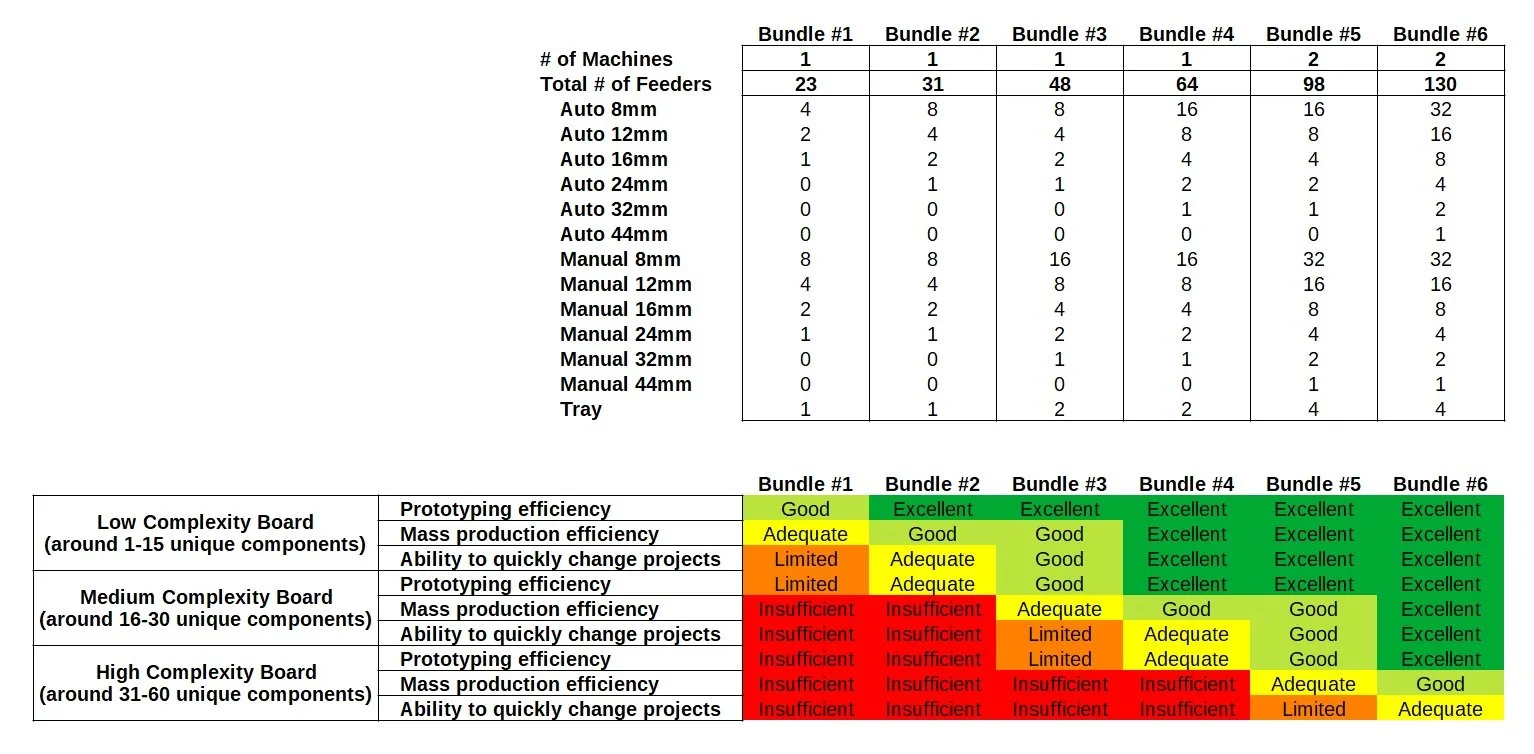
Start with your project’s Bill of Materials (BOM) and determine how many unique parts there are.
Low Complexity (around 1-15 unique components)
Medium Complexity (around 16-30 unique components)
High Complexity (around 31-60 unique components)
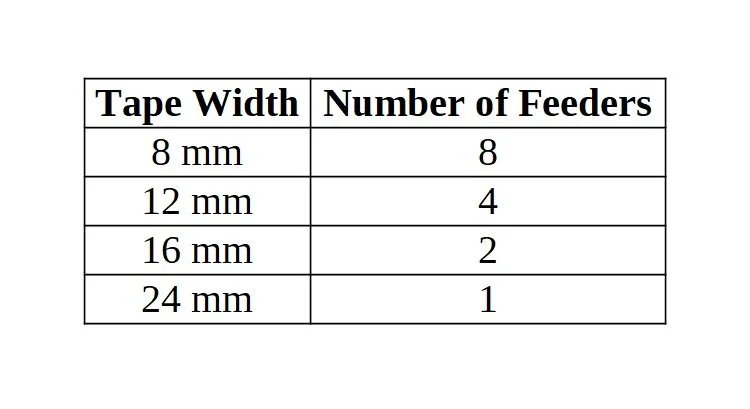
In general, PCBs tend to have fewer large components than small ones. Passive components such as capacitors and resistors often outnumber other larger components such as chips and connectors. As a starting point, we recommend that you halve the number of feeders as the tape width increases.
For example:
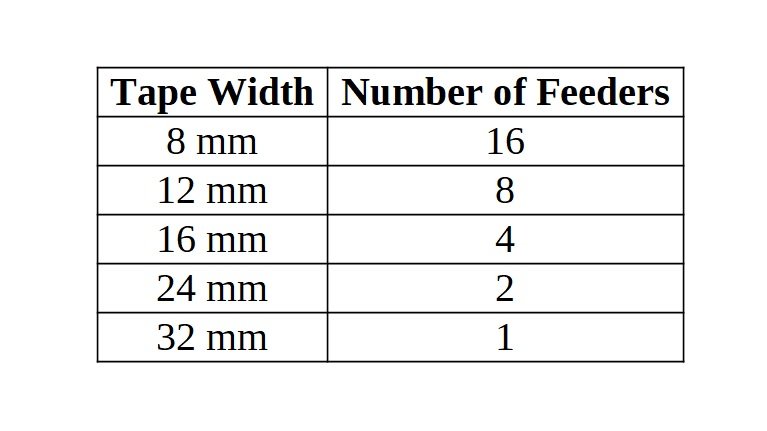
For more complex boards, you may want to increase the number of feeders and include larger widths as well, but the recommended ratio remains the same.
For example:
Some chips also come in JEDEC tray packages. A tray holder accessory is available to handle these cases.
Ultimately, selecting the right feeder combination depends on your current projects and anticipated future needs. To ensure that you have the necessary feeders for a specific project, you can do an exact calculation.
Exact Calculation
Start with your project’s Bill of Materials (BOM).
For every unique component, determine the tape width. There are two ways to do this:
Look up the datasheet; or
Measure the width directly with a ruler if you already have the components.
Estimated Time Needed to Set Up and Operate Feeders
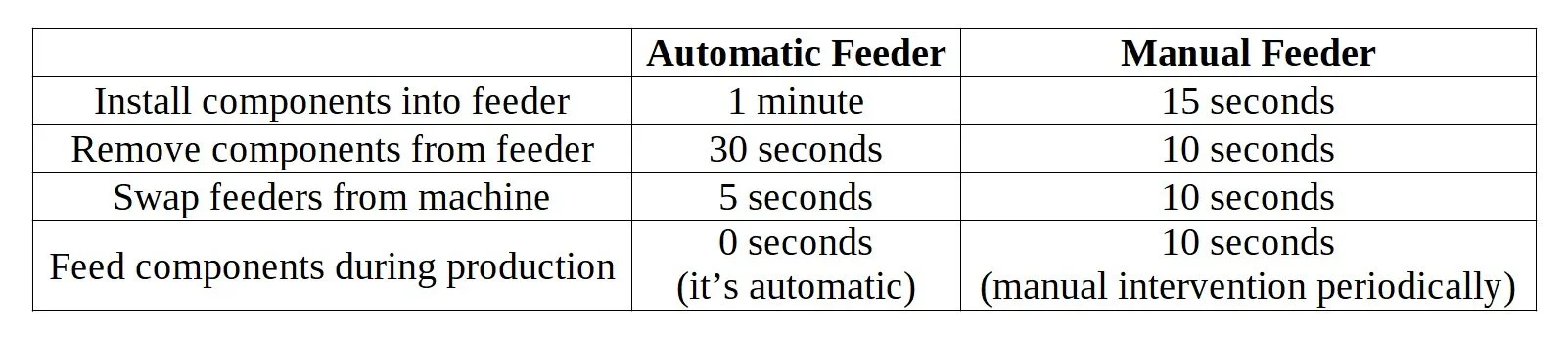
Automatic feeders require more time to set up but take no time away from the user during production. The reverse is true for manual feeders, where setup is quick but manual intervention is required periodically.
A good idea is to keep frequently-used components—like 100nF capacitors or 1K resistors—permanently installed in automatic feeders to save time during both prototyping and mass production.
The Benefits of Feeders on Standby
During production, there are two ways to switch components.
Change Components: remove existing components from feeders and install different ones.
Swap Feeders: pull out the whole feeder from the machine and replace it with a feeder on standby that already contains the desired components.
Having feeders on standby lets you hop from one project to another quickly, improving overall productivity.
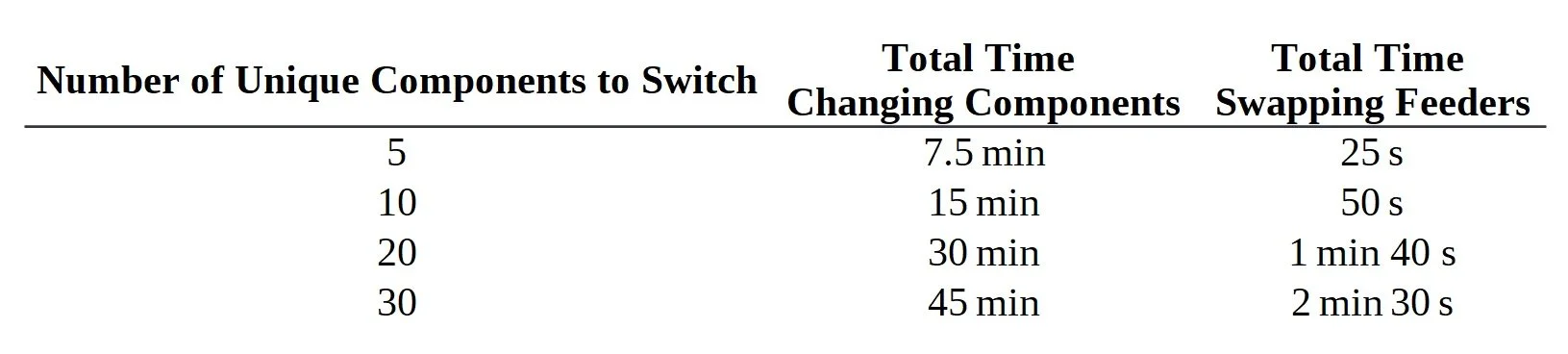
For example, individually changing 30 reels of components in automatic feeders can take about 45 minutes in total (1 ½ minutes per change). But swapping the same 30 automatic feeders for other feeders on standby would require less than 3 minutes in total (5 seconds per swap).
More examples: